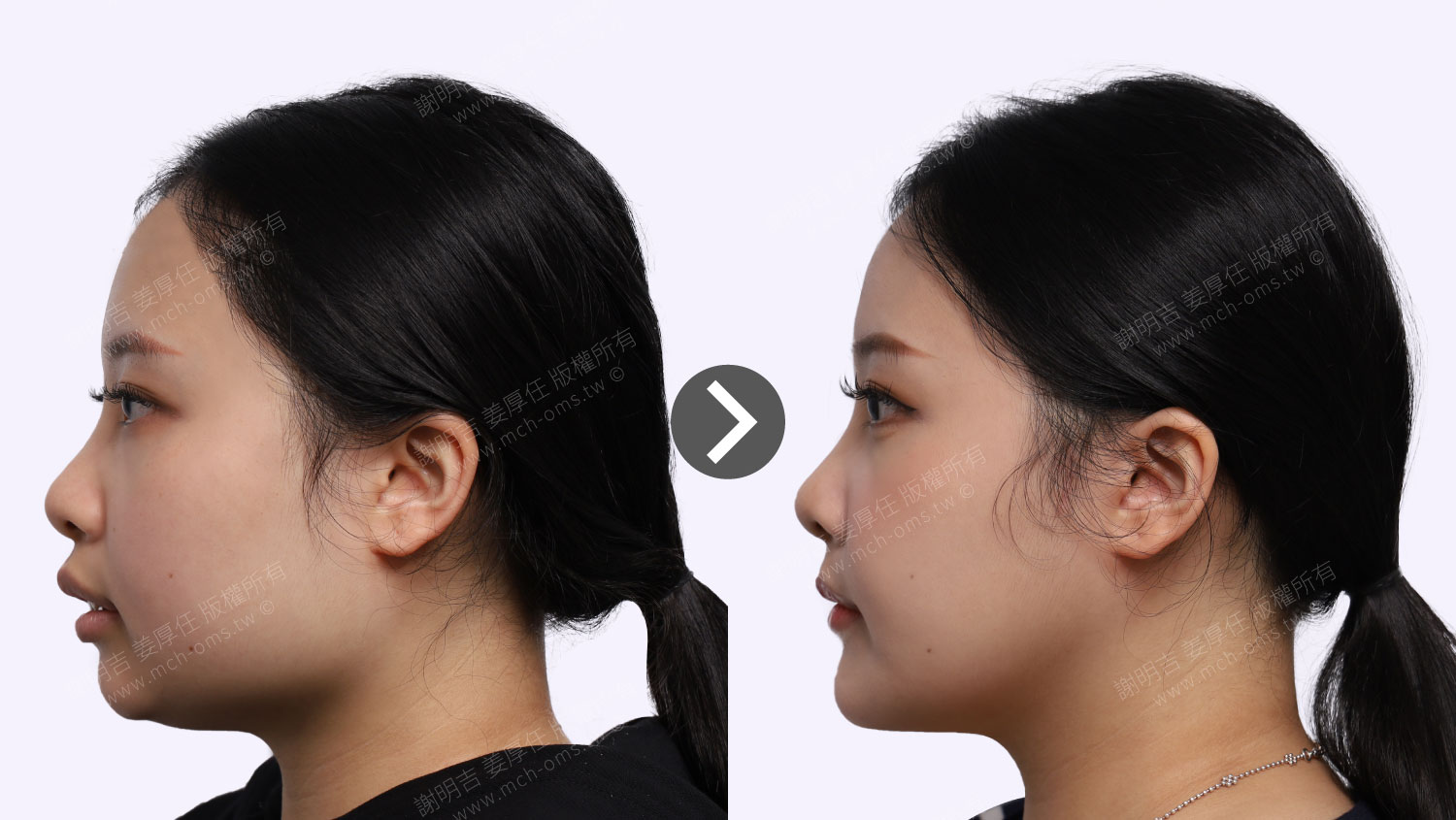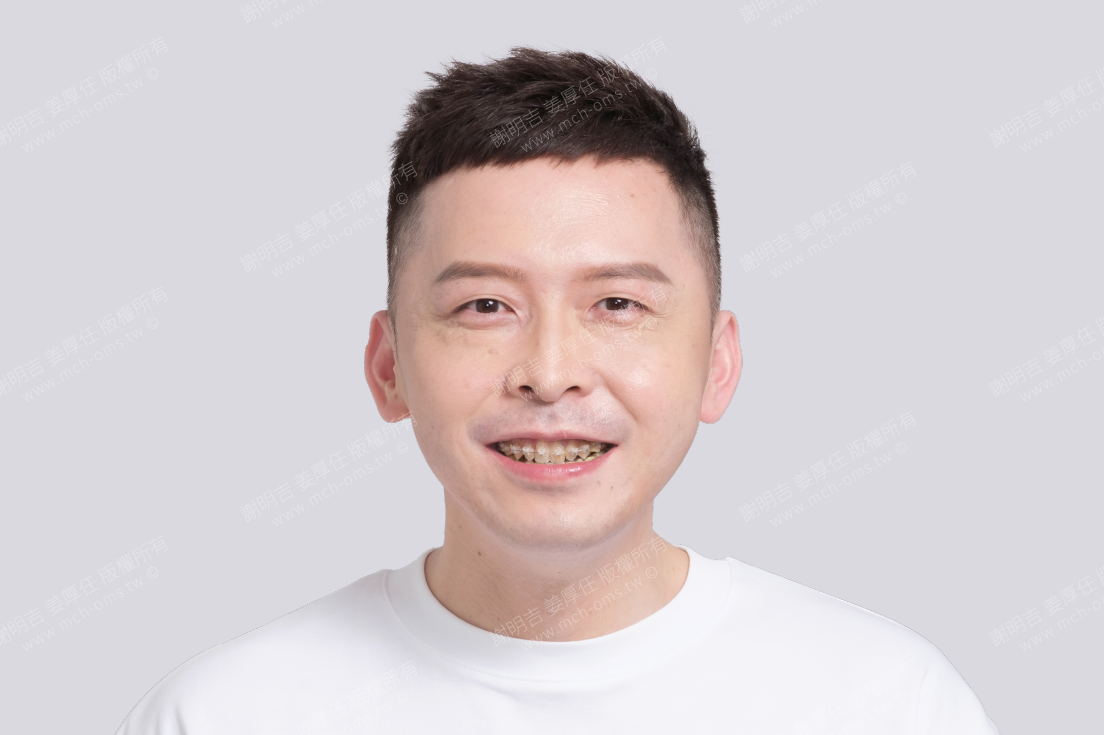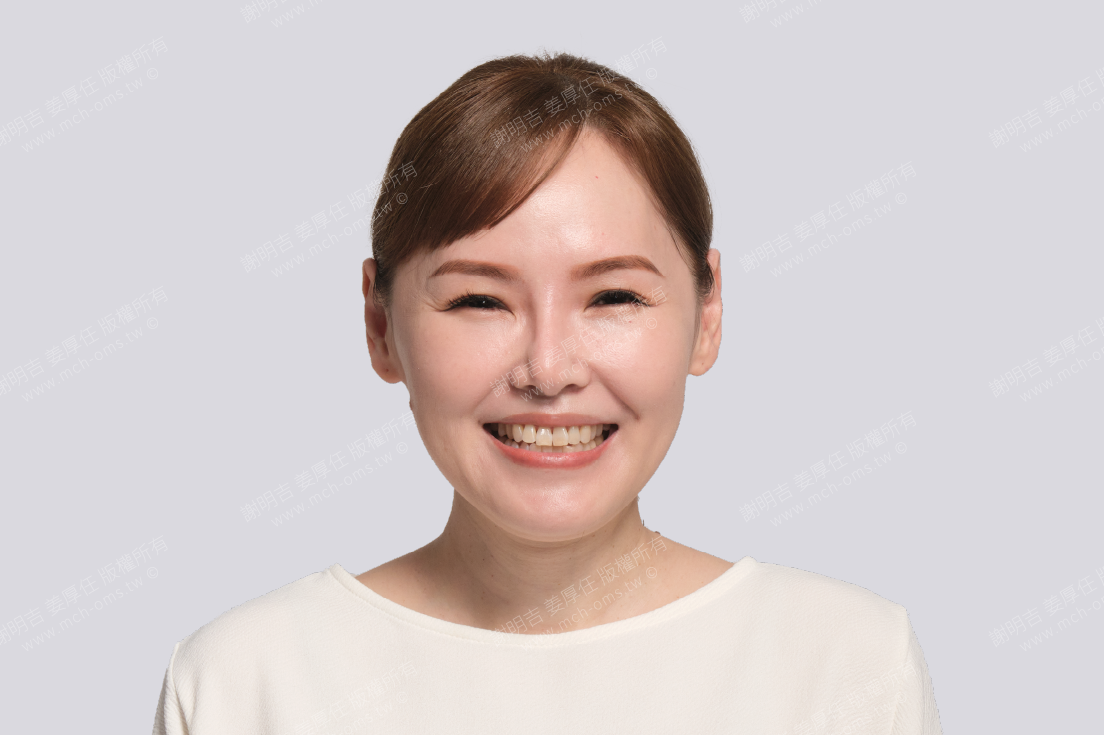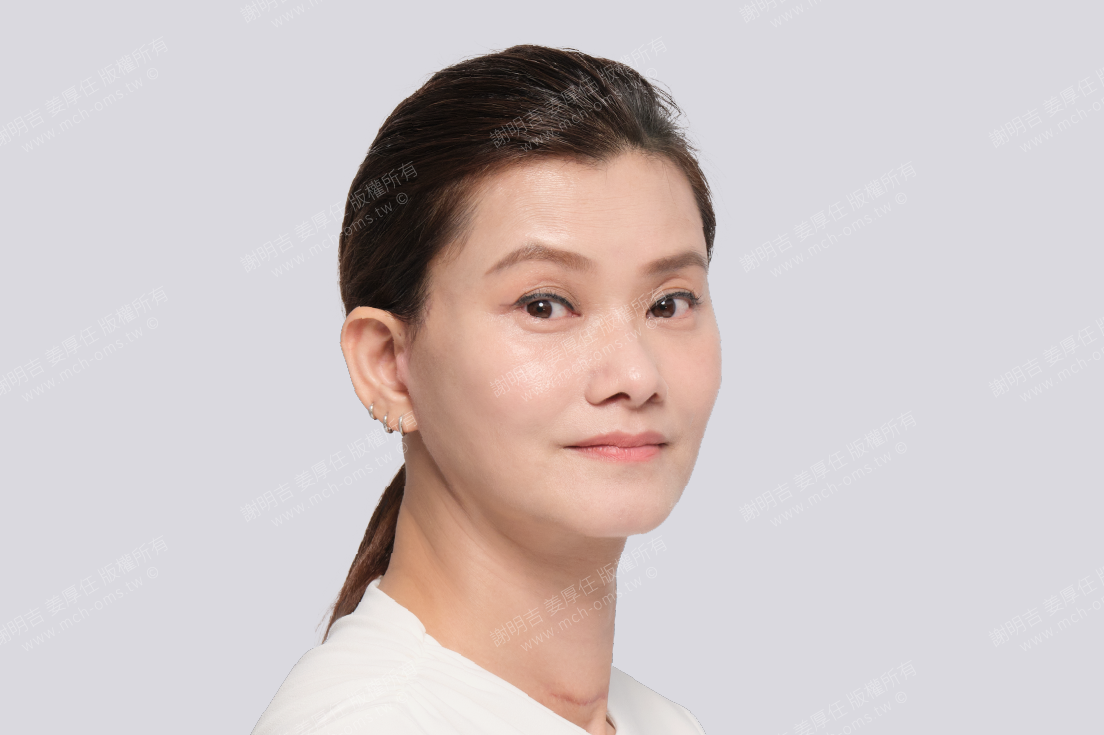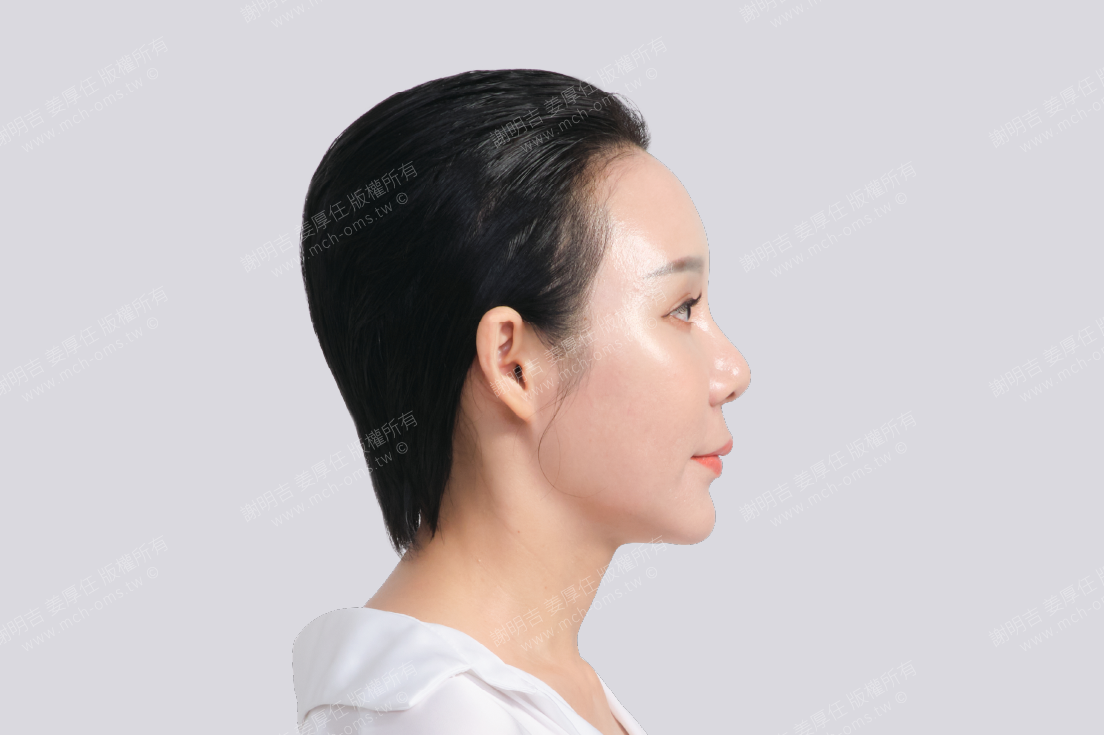
Retruded mandible and low-angled mandibular line
3D customized orthognathic surgeryOperation(upper and lower jaw)
Zygomatic bone reduction
mandibular angle reduction
chin sculpture
Bilateral masticatory muscle thinning
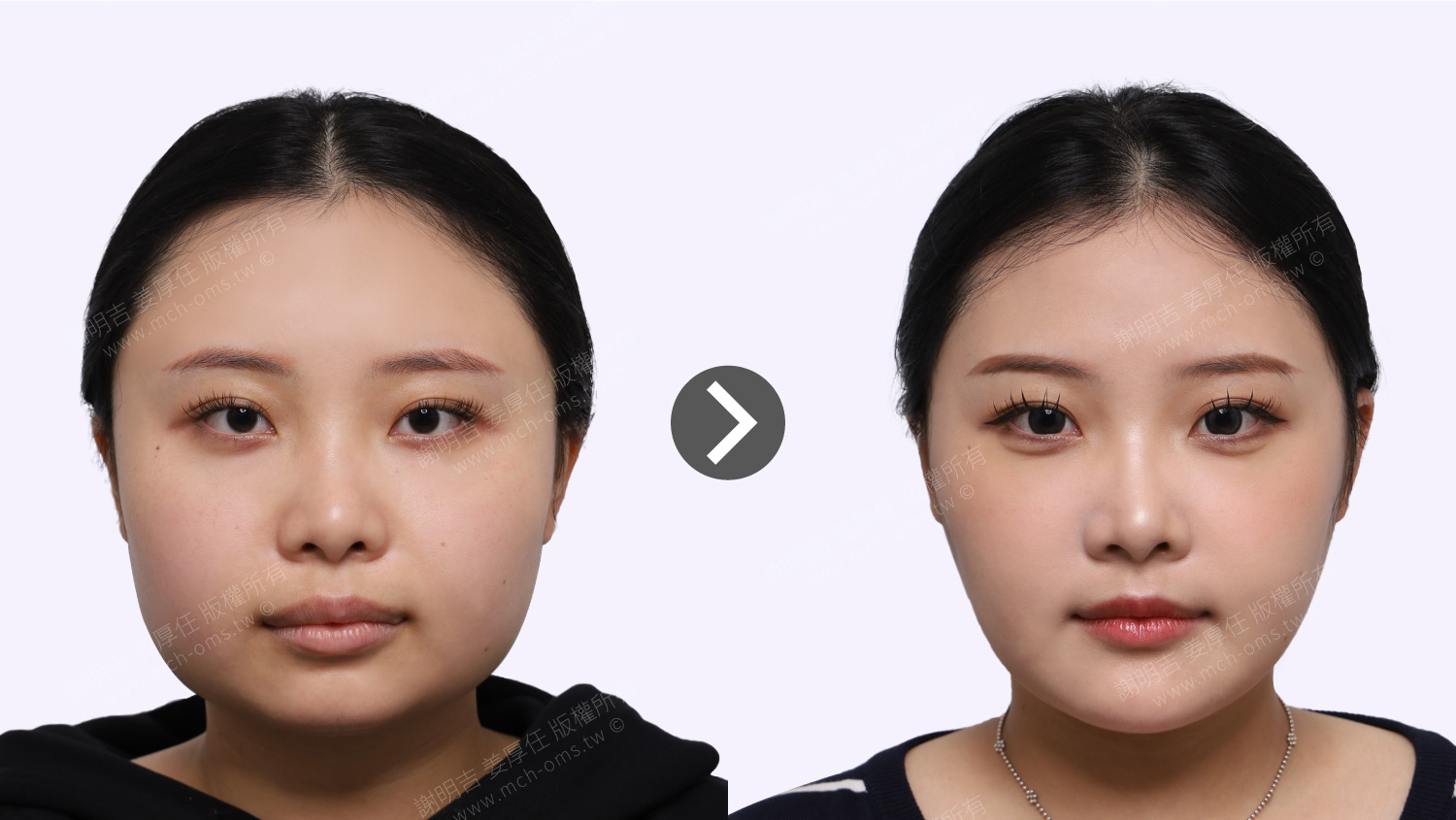
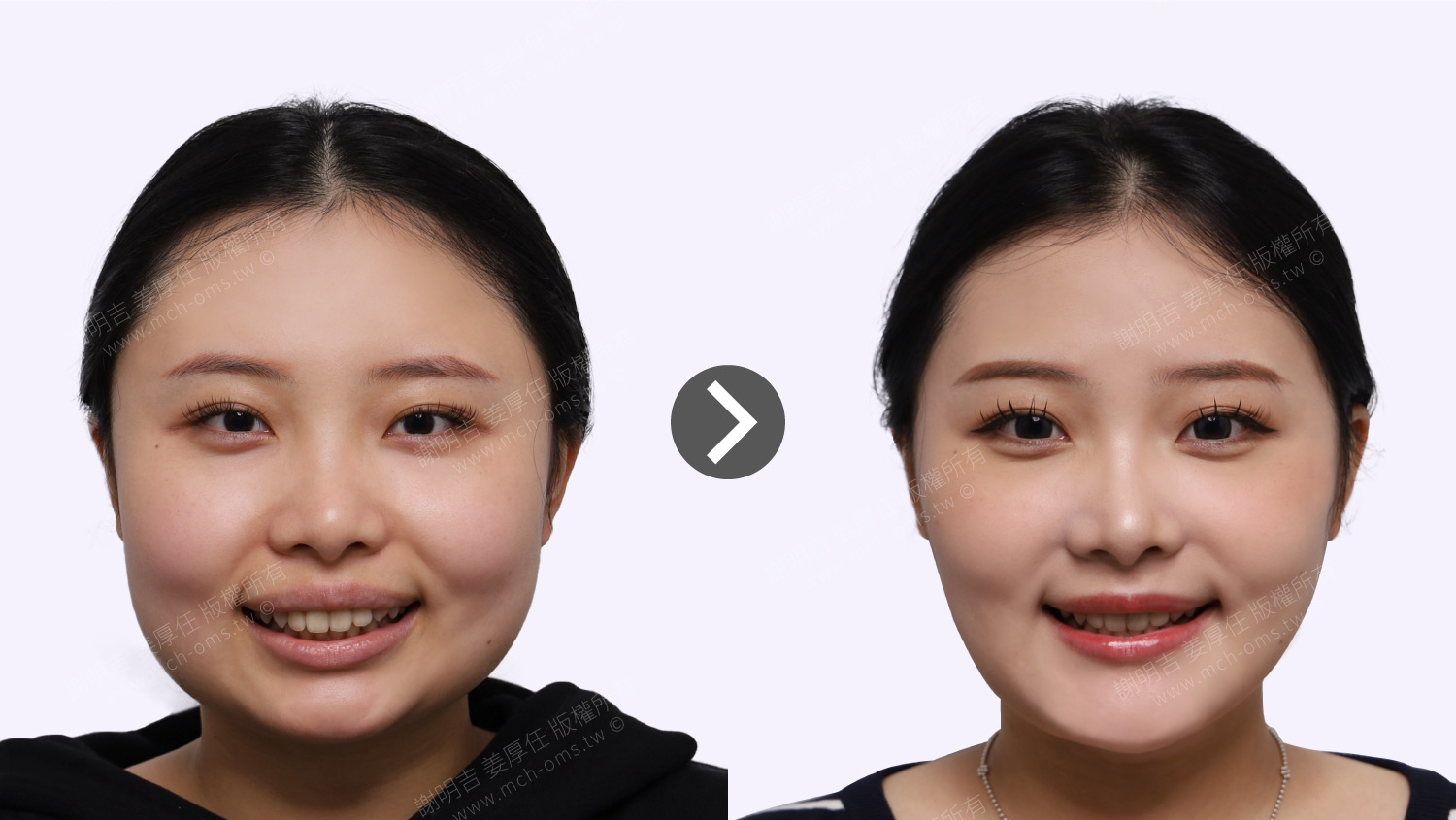
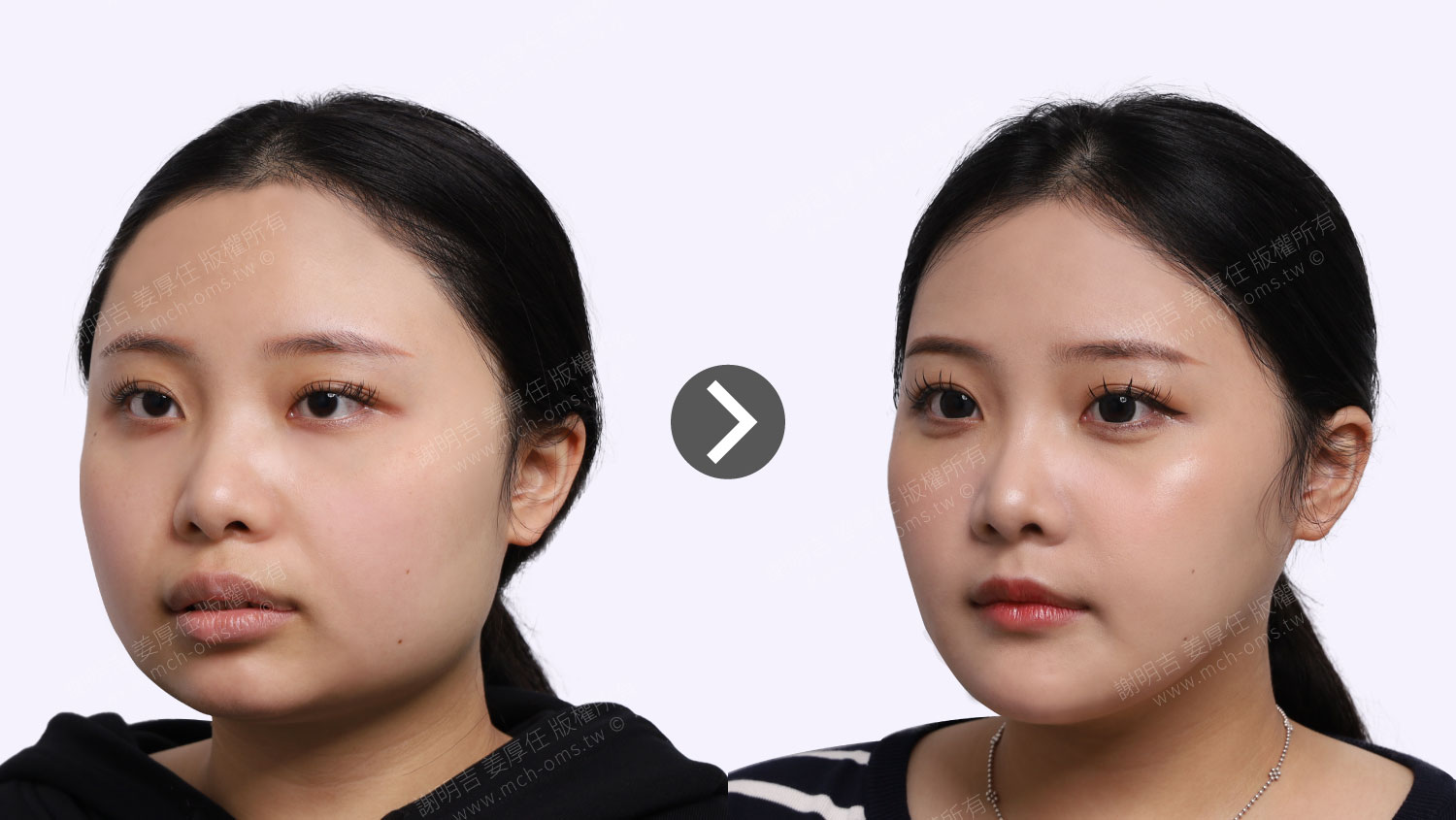
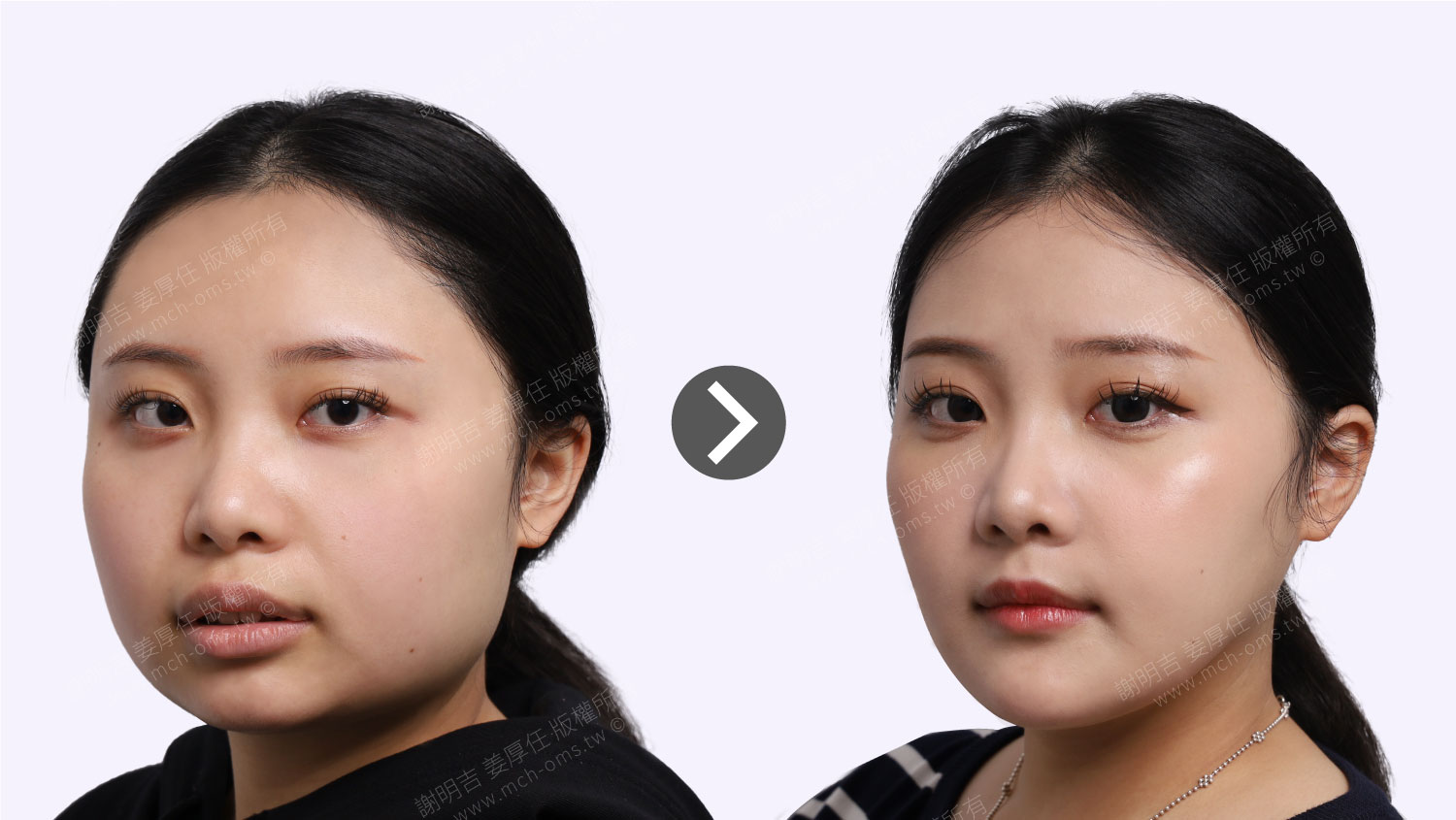
The patient's main complaint was that he wanted to improve the protruding mouth, wide and square face (Chinese character face).
After our computer tomography examination and analysis, her facial diagnosis included slight protrusion of the upper jaw, slight retrusion of the lower jaw, slight deep bite, slight deviation of the occlusal plane, excessive mandibular angle, hypertrophy of masticatory muscles, and flaring of the cheekbones, etc.
Although each part is slightly abnormal and does not affect the bite function at all, the combined effect is enough to make the face look like a protruding mouth and a square face.
Our design plan for her face included double-jaw orthognathic surgery combined with cheekbone reduction (narrowing) and mandibular reduction and combination.Bilateral masticatory muscle thinningAnd jaw sculpting surgery, rotating the bite plane clockwise,
In addition to increasing the smile curve, it also makes the chin and mandibular lines slimmer.
After the surgery, she liked the change in face shape, which became sweeter and more refined.
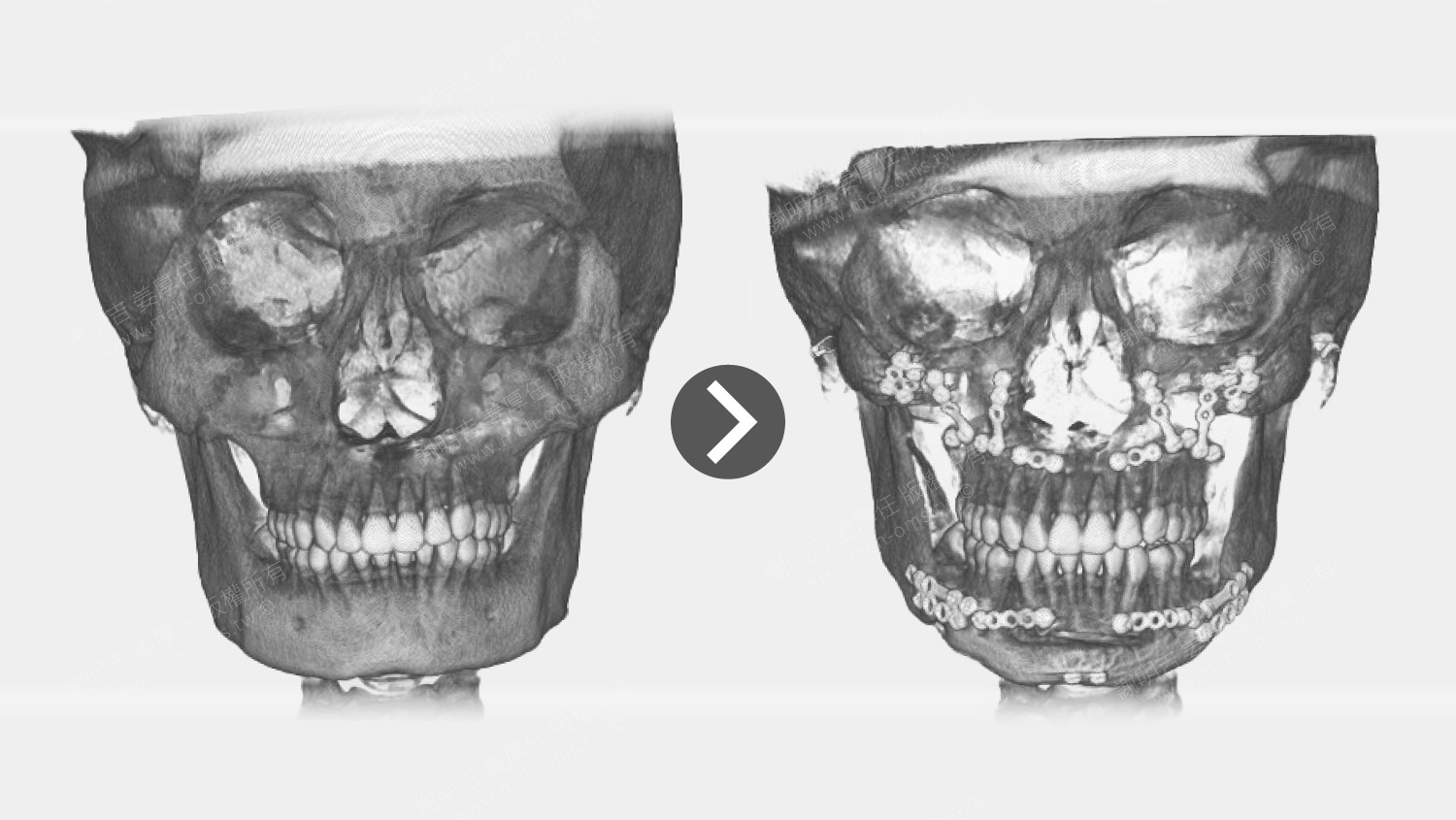
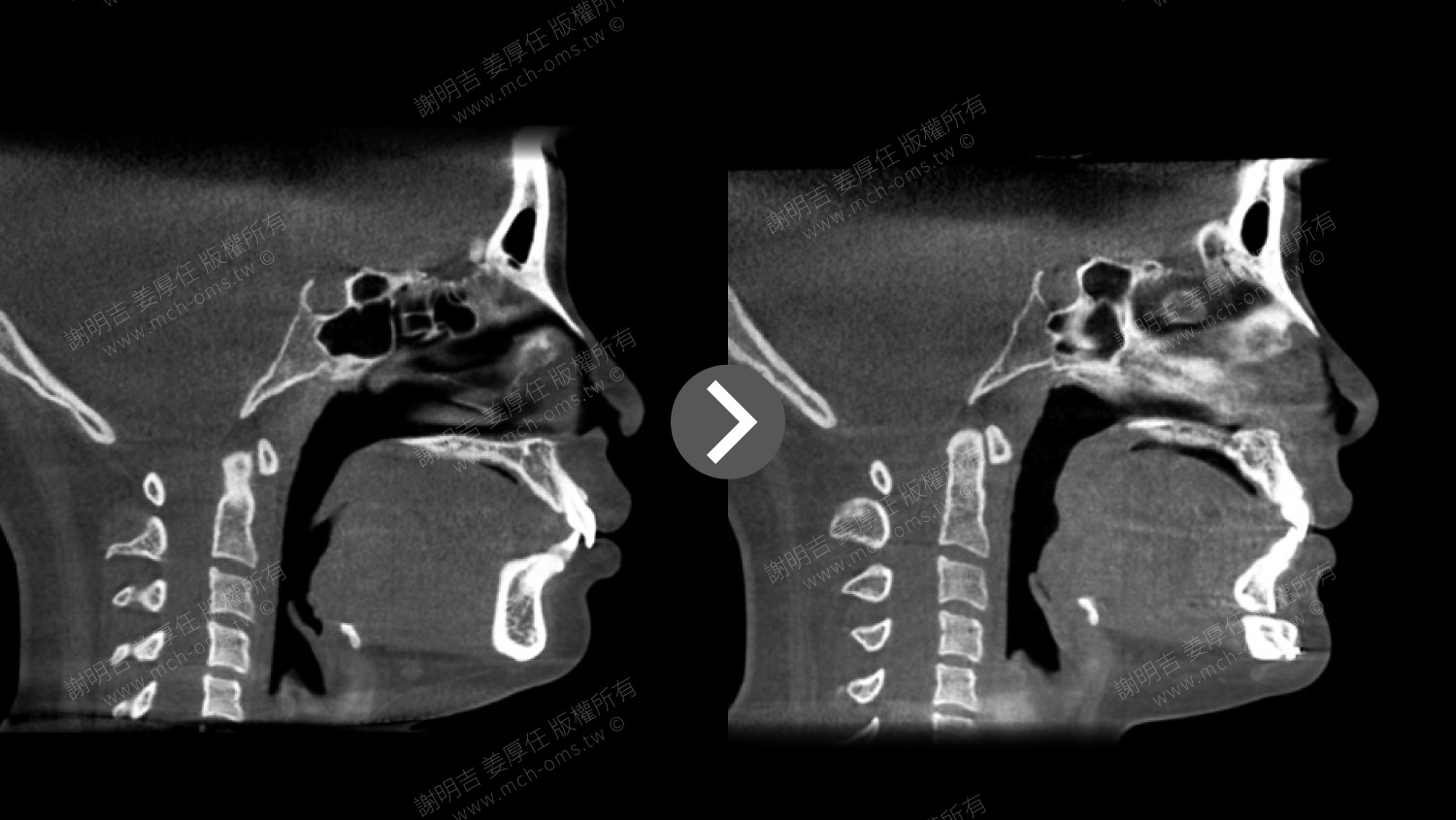
Attached is a comparison of computed tomography before surgery and six months after surgery. This was originally a case where surgery was given priority (plus postoperative orthodontics).
However, after the surgery, she felt very comfortable with the changes in her bite and did not receive post-operative orthodontic treatment.
This patient’s chief complaint was to improve the appearance of a protruding mouth, a wide face, and a square-shaped face.
After CT examination and analysis, her facial diagnosis included mild maxillary protrusion, mild mandibular retrusion, mild deep bite, slight occlusal plane cant, overly square mandibular angles, hypertrophic masseter muscles, and zygomatic bone flaring.
Although each condition was only mildly abnormal and did not affect occlusal function at all, the combined effect was enough to create the impression of a protruding mouth and square face.
Our facial design included bimaxillary orthognathic surgery combined with zygomatic and mandibular contouring, as well as chin sculpture, with clockwise rotation of the occlusal plane. This not only enhanced the smile curve but also made the chin and jawline more defined. Postoperatively, she was very pleased with the facial changes, which gave her a sweeter and more refined appearance.
We have attached CT comparisons before surgery and six months after surgery.
This was originally a surgery-first case (followed by postoperative orthodontics), but after surgery she felt very well adapted to the changes in occlusion and did not undergo orthodontic treatment afterward.