2013.12.31
2013.12.31
2013.12.06
2013.11.01韓國 52nd Congress of KAMPRS
Depending on the position of the brows and the hairline margin, the forehead occupies around 30~40 % of the face. It plays a major role of an individual's overall aesthetics. It also has great impacts on the youthfulness of the periocular and midfacial areas. Endoscopic forehead rejuvenation probably has drawn the most attention throughout the literatures in recent years, however, they usually merely addresses the issue about brow position without consideration of the bone deformity and hairline position. The shape of the bony forehead and superior orbital rims are often the key for forehead rejuvenation and correction of the deformity as a whole. The bony forehead can usually be augmented and reduced at the same time; the brows should be lifted or reshaped at the end of the procedures. The ability to understand of the aesthetic forehead contour, brow position, eyelid anatomy, appropriate hairline position, and the ability to correct bony deformity using power equipment and variable implant material for augmentation are all import for a aesthetic forehead surgery. In this presentation, the author will go through diagnosis of the variable forehead problems and the unique approach to correct the deformity of the supra-orbital rims, the frontal flatness or depressions, brow ptosis and receding hairline all at the same time.
2013.10.31韓國 52nd Congress of KAMPRS
Generally, facial rejuvenation surgery can be divided into following areas: upper face, periorbital, midface, lower face and neck areas. Although there is always a certain surgical technique designed for a certain type of facial aging, for example, brow lift for brow ptosis; however, every anatomic region is intricately connected to each other. Diagnosis of the facial aging and the proper suggestion to a patient for facial rejuvenation can be an extremely complicated process. Filler or facial implants; hard tissue or soft tissue; upper face or lower face; lift or augmentation are all confusing considerations when communicating with an aging patient. The key to select the correct procedure is an adequate preoperative diagnosis. Focusing on the patient primary concern is always a good start; for example, patient may complain about recent tiring look around the eyes, blepharoplasty with brow lift probably is the prioritized procedure to talk about. This lecture will give surgeons the current concepts for variable facial rejuvenation techniques. A spectrum of procedures are available from facial implant augmentation, fat grafting, lip lifting, face lift, brow lift, blephoraplasty, and combined hard-soft tissue approach will be covered with special attention to combined surgery to achieve the best results.
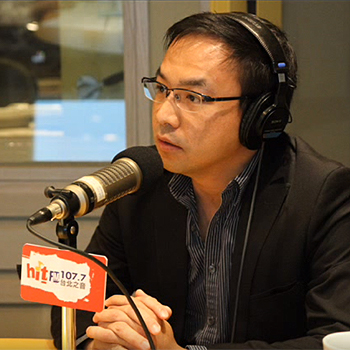
2013.10.14
2013.10.02
2013.09.07台北國際會議中心(TICC)
Orthognathic surgery is traditionally performed to correct dentofacial deformities and malocclusions. There is increasing number of patients, however, seeking change of maxillofacial characteristics without existing functional complaints. These patients desire only for cosmetic enhancement rather than functional improvement. Anatomically, hard and soft tissue are tightly connected and mutually related. Dramatic cosmetic improvement can usually be achieved by minor skeletal movement and re-contouring. Unattractive facial features are completely evaluated and many additional cosmetic procedures can be recommended to supplement orthognathic or facial skeletal surgery. Almost all kinds of cosmetic procedures can be added simultaneously under reasonable operation time with careful judgment of soft tissue edema. This presentation will focus on the integration of facial plastic procedures and skeletal surgery for achieving the best aesthetic result.
2013.09.01
2013.08.01taiwan